
How Colorado Courts Handle Criminal Cases
Colorado criminal cases move through several court levels. Municipal courts hear local ordinance and charter violations. County Court handles misdemeanors, petty and traffic matters, protection orders, and the early stages of felony cases. Colorado District Court is the felony trial court and has broad criminal jurisdiction. Most criminal appeals from District Court go to the Colorado Court of Appeals, with discretionary review by the Colorado Supreme Court.
Each of Colorado's 64 counties has a clerk of court, although the counties are grouped into 23 judicial districts. That clerk holds the official Colorado register of actions, pleadings, orders, and certified disposition for a filed state case. A police report stays with Colorado law enforcement. Prosecutor discovery is also not the same as the public Colorado court file. These boundaries matter because no single Colorado court case lookup returns every related criminal record.
Jurisdiction path: Municipal or County Court › Colorado District Court › Colorado Court of Appeals › Colorado Supreme Court
Colorado Criminal Courts Compared
The Colorado court named on a case record signals both the type of charge and where to ask for documents. A Colorado felony may begin with an advisement or preliminary hearing in County Court before it moves to District Court. A city-code charge can remain in Municipal Court. That local court may use a city portal rather than a Colorado Judicial Branch system.
Colorado's district map also changed recently. The 23rd Judicial District began in 2025 after Douglas, Elbert, and Lincoln counties separated from the former 18th District. An older Colorado court record may therefore use a district reference that no longer matches the current map. The county and case number are safer routing keys for archived files.
| Court | Criminal Work | Record Source |
|---|---|---|
| Municipal Court | Ordinance and charter violations | The specific city's court channel |
| County Court | Misdemeanors, petty matters, and preliminary felony work | County clerk and state court systems |
| District Court | Felony trials and general criminal jurisdiction | County clerk and state court systems |
| Appellate courts | Review of lower-court rulings | Colorado appellate records |
The Colorado Judicial Branch district map shows the statewide court structure and its county groupings, and it explains why a district name does not replace the filing county.
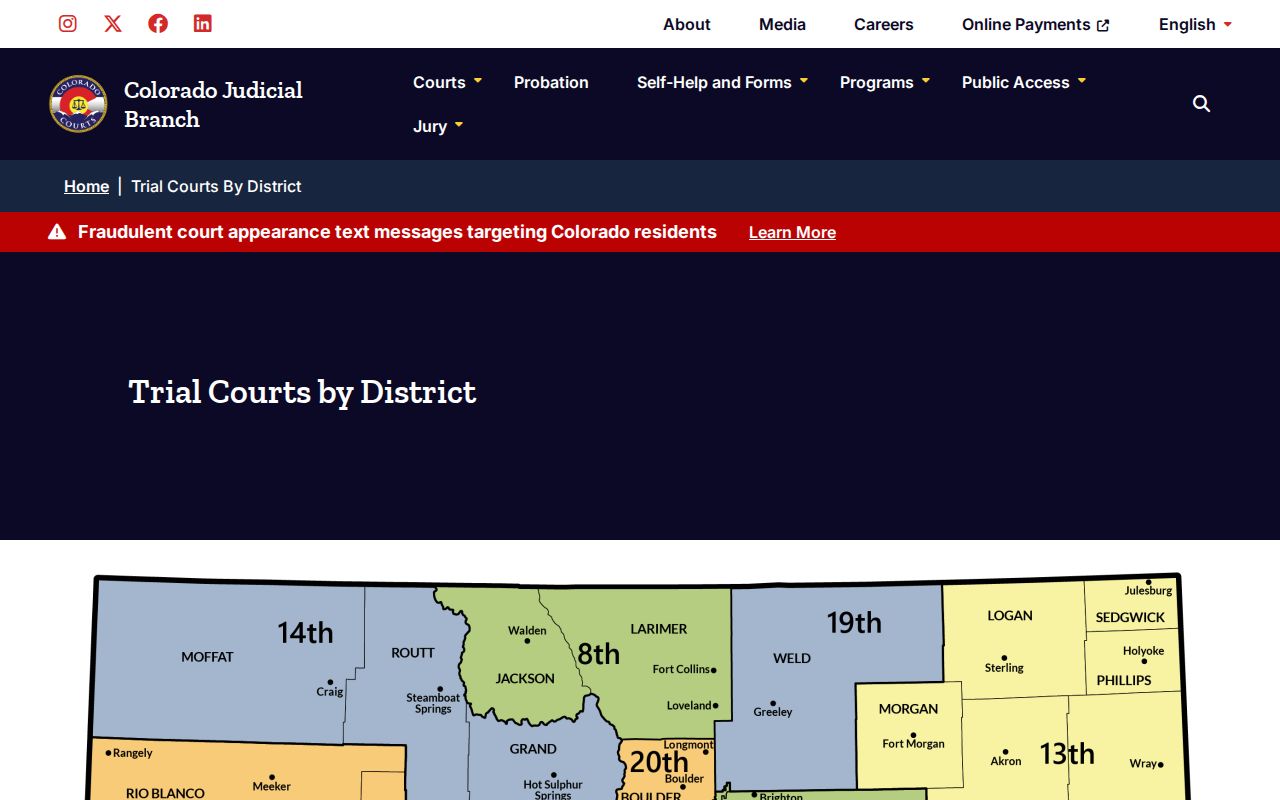
A searcher still needs the clerk in the county where the case was filed.
Running a Colorado Judicial Branch Docket Search
The free Colorado Judicial Branch Docket Search is best used to find scheduled Colorado court events. It is a calendar, not a full historical Colorado case-record database. Colorado search results can identify a case number, hearing date, county, courtroom or division, case type, event, and judicial officer. They may not show the final Colorado disposition, complete charge history, bond ledger, or pleadings.
- Select the filing county and, when available, the court type or location.
- Set the scheduled date or date range for the Colorado court event.
- Add the case number or party name to narrow possible matches.
- Read the event details without treating the calendar entry as a final outcome.
- Ask the filing county's clerk for the register, public documents, or a certified disposition.
| Field Label | Type | Required | Notes |
|---|---|---|---|
| County | Dropdown | In practice | Controls available courts and locations |
| Court or Court Type | Dropdown | Conditional | May narrow to District or County Court |
| Date or Date Range | Date selector | Yes | Looks for scheduled events, not all history |
| Case Number | Text | No | An exact number sharply narrows results |
| Party Name | Text | No | Last name with optional first name |
| Attorney | Text | No | Available for calendar searches where offered |
The official Colorado docket interface shows why both county and date are central to a useful Colorado court case search.
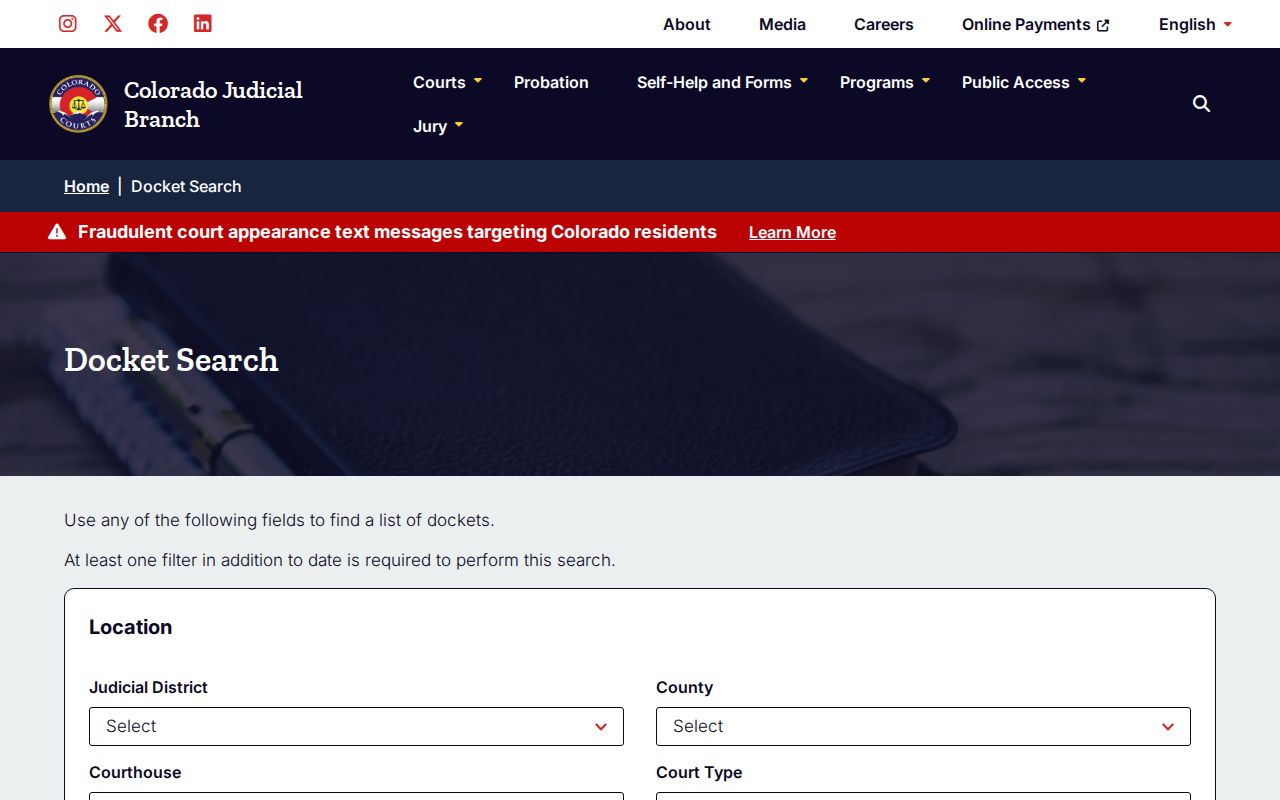
Use the displayed case number as the bridge to the clerk's full file.
Colorado Court Lookup Limits
A blank Colorado docket search does not prove that no Colorado criminal case exists. The free tool centers on scheduled events. Older Colorado cases, cases without a coming hearing, archived files, and records in separate municipal systems may require another route. Denver County Court is also outside the standard Colorado Judicial Branch channel, while Denver District Court remains within it.
For a broader Colorado register of actions, the Judicial Branch identifies contracted data providers. CoCourts receives real-time register data for participating Colorado District and County Courts and charges for access. Its index is not the official Colorado court record. Coverage can exclude municipal cases and Denver County Court, and document images are generally not the product.
The state's court records search guidance sets out the difference between online data and clerk-held records.
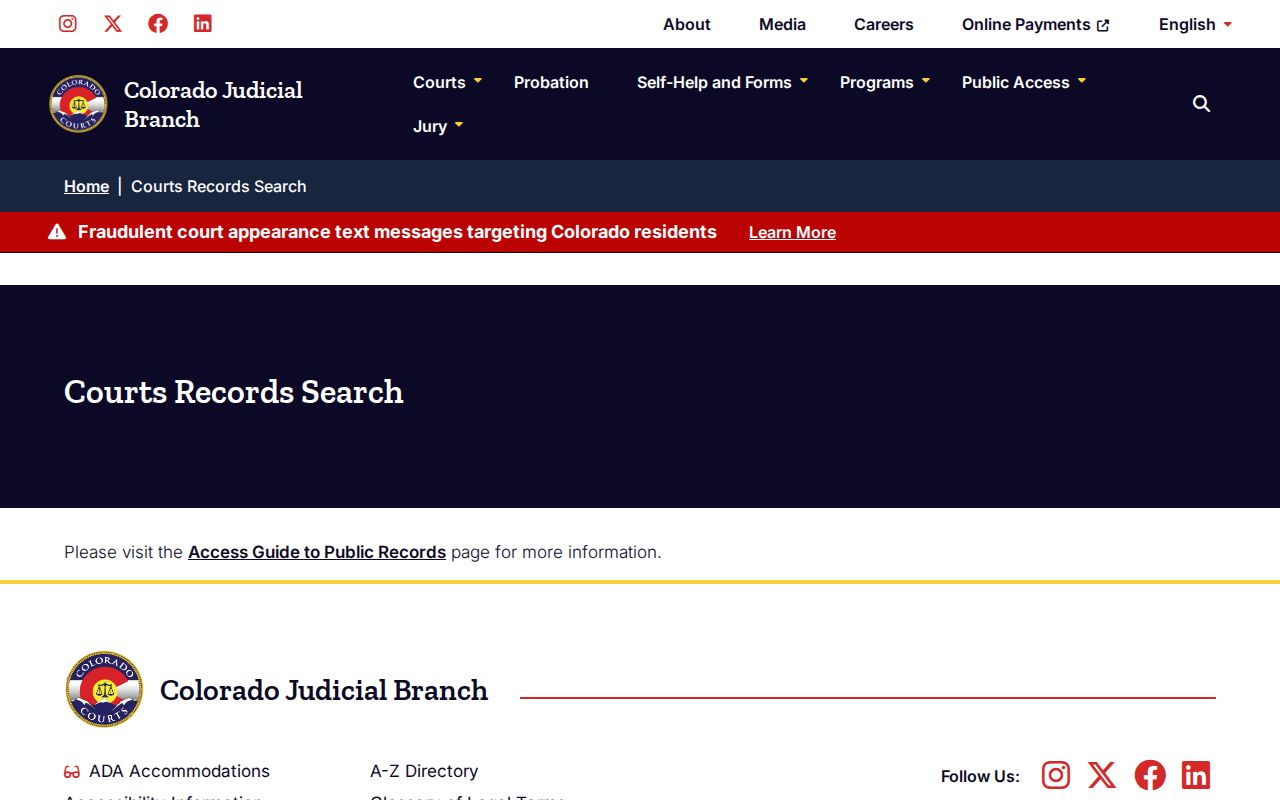
That distinction protects against treating a paid index entry as a certified Colorado court disposition.
What a Colorado Case File Contains
A Colorado criminal case file records what prosecutors filed and what the Colorado court did. Public content varies, but the Colorado register often shows the case status, counts, hearings, and disposition. The clerk may also release the complaint, information, plea, judgment, mittimus, or other public Colorado documents. Protected addresses, victim and minor details, financial account data, sealed records, and suppressed material are withheld or redacted.
| Case Number & Court | Identifies the filing court, county, division, and specific Colorado case. |
|---|---|
| Charging Documents | Show the prosecutor's filed counts, which may differ from booking labels. |
| Docket Entries | Chronicle filings, orders, warrants, pleas, hearings, and later activity. |
| Hearing Dates | List scheduled or completed proceedings and assigned locations. |
| Disposition | Records whether each charge ended in conviction, dismissal, acquittal, or another result. |
| Sentence & Judgment | May state custody, probation, fines, costs, restitution, and sentencing orders. |
A financial balance alone does not prove that all sentence conditions remain active. Read it with the judgment and later entries.
Reading Colorado Criminal Case Entries
Colorado court registers use short terms for major changes in a Colorado case. An advisement is an early hearing about charges, rights, custody, and bond. Arraignment is the stage when charges are addressed and a plea is entered. A Colorado disposition is the result for a charge, not merely the last event date shown.
- Deferred judgment
- A guilty plea whose judgment may be deferred, with eligible dismissal after successful conditions.
- Nolle prosequi
- A prosecutor's decision not to continue a charge.
- Mittimus
- The court order that carries the sentence or commitment into effect.
- Capias or bench warrant
- Court authority to arrest, often tied to a missed appearance or noncompliance.
- Disposition
- The recorded outcome for the case or for an individual count.
Original and amended charges can appear together. The last filed count and its disposition usually answer a different question than the first arrest label. When an entry is unclear, request the order behind it from the clerk.
Colorado Criminal Case Stages
A Colorado arrest or citation creates an agency record first. If the prosecutor files a case, the Colorado court records a complaint, information, or returned indictment. County Court may handle an advisement and preliminary felony proceeding before a felony reaches Colorado District Court. Arraignment, motions, plea negotiations, or trial follow. The court then enters a verdict or plea, disposition, and any sentence.
Case flow: Charges Filed › Arraignment › Pretrial › Plea or Trial › Disposition › Sentencing
The register shows that sequence, but it does not always provide the text of each filing. Under Colorado law, courts must report a case number and final result for each charge to CBI within 72 hours, excluding weekends and legal holidays. Identifier mismatches and older gaps can still leave a repository entry marked unknown.
Note: A court case file is the source for the adjudication; a CBI rap sheet is a compiled statewide history.
Colorado Court Record Access Boundaries
Colorado court access follows Chief Justice Directive 05-01 rather than the public-record rules used for Colorado police files. The directive sorts Colorado court information into public, protected, restricted, suppressed, and sealed classes. A public Colorado register entry does not make every attachment public. The clerk may redact personal identifiers or withhold a filing that falls within a protected class.
Sealed Colorado criminal cases leave ordinary public view. Juvenile and victim-sensitive material has added limits. When only part of a document is protected, ask whether a redacted public copy can be released. Plain copies and certified copies serve different needs and may have different clerk fees.
Fixing Colorado Case Disposition Gaps
A Colorado Bureau of Investigation result may show an arrest with an unknown outcome even when the county case has ended. That gap does not change the court's judgment. It means the reported disposition may be missing or may not have matched the arrest cycle. Most electronic court reporting began around 1998, so older records deserve close review.
- Identify the court case number and the filing county from the docket or register.
- Request an official or certified disposition for every relevant charge from the clerk.
- Compare names, dates, SID, TCN, agency identifiers, and case numbers where available.
- Submit the official court document through CBI's disposition-update process.
Correcting a disposition is not the same as sealing the Colorado record. A sealing request follows the qualifying process in the court that holds the arrest or case file.
County Sources for Colorado Case Records
The complete Colorado case file sits with the clerk in the Colorado filing county. Start there for Colorado pleadings, orders, archived material, plain copies, and certification. Ask about in-person, mail, or archive retrieval when Colorado online systems have no result. Check the relevant municipal court separately if the allegation involved a city ordinance.
County routing also separates the court file from related records. The arresting police or sheriff keeps the incident report. The jail keeps its booking data. The clerk keeps the judicial record. Browse the directory of all 64 Colorado counties to reach the correct local criminal-records site and identify the filing county's official channels.
The authorized CoCourts provider displays broader register access for participating Colorado trial courts.
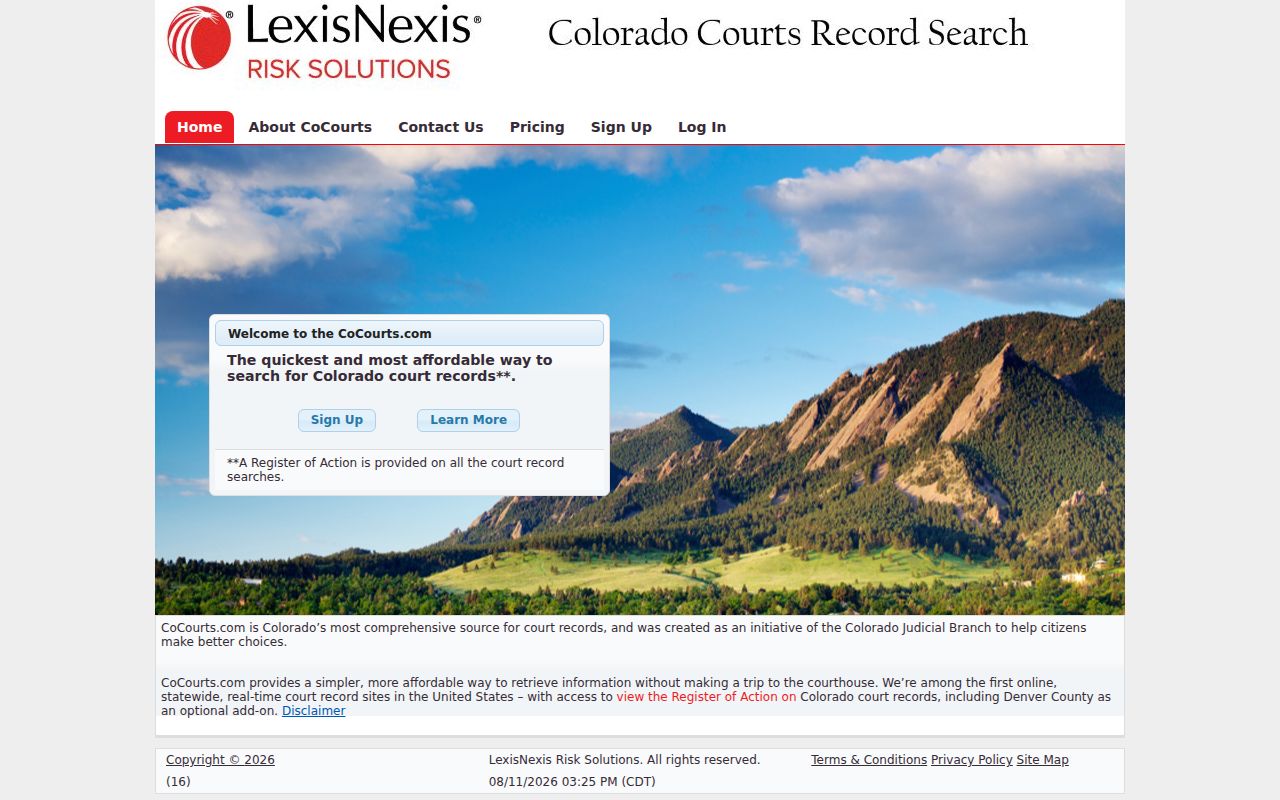
A vendor result helps locate a Colorado case, while the county clerk remains the source for the authoritative file.