
Colorado Criminal History Checks
Start with the question, not a person’s name. The Colorado Internet Criminal History Check, or ICHC, searches public Colorado criminal history reported to CBI by name and date of birth. It does not confirm identity by fingerprints. A county clerk holds the filed case and certified disposition. Police keep incident reports, sheriffs and jails keep booking data, and CDOC tracks people under state corrections jurisdiction.
A careful Colorado criminal record check uses the narrowest official source that can answer the question. Keep the date, agency, case or report number, and result number. Those details make a conflict much easier to trace.
- Use ICHC for the public statewide repository layer.
- Check the Judicial Branch docket for a scheduled court event.
- Open the correct county site for booking, case, or clerk records.
- Use CDOC, the CBI registry, or federal systems only for their stated scope.
- Order a certified disposition or personal fingerprint review when identity or an official outcome must be resolved.
Note: A blank result in one Colorado system is not proof that no record exists in another official system.
Colorado ICHC Search Fields
ICHC charges $6 for each result downloaded. The search can return more than one candidate when a name and birth date are shared. Each selected history costs another $6, so exact legal spelling matters. CBI advises users to search alternate names and spellings separately when those forms may appear in the record.
| Field | Use | Search caution |
|---|---|---|
| First and last name | Required identity fields | A common name can produce several candidates |
| Date of birth | Required match field | Use the exact date when known |
| Social Security number | Optional narrowing field | It helps only when CBI has matching data |
| IDT number | Conditional identity-theft field | Use only a number issued by CBI |
| Unique report number | Retrieves a prior result | Preserve it with the search date |
The official CBI records and background checks page shows the state product routes:
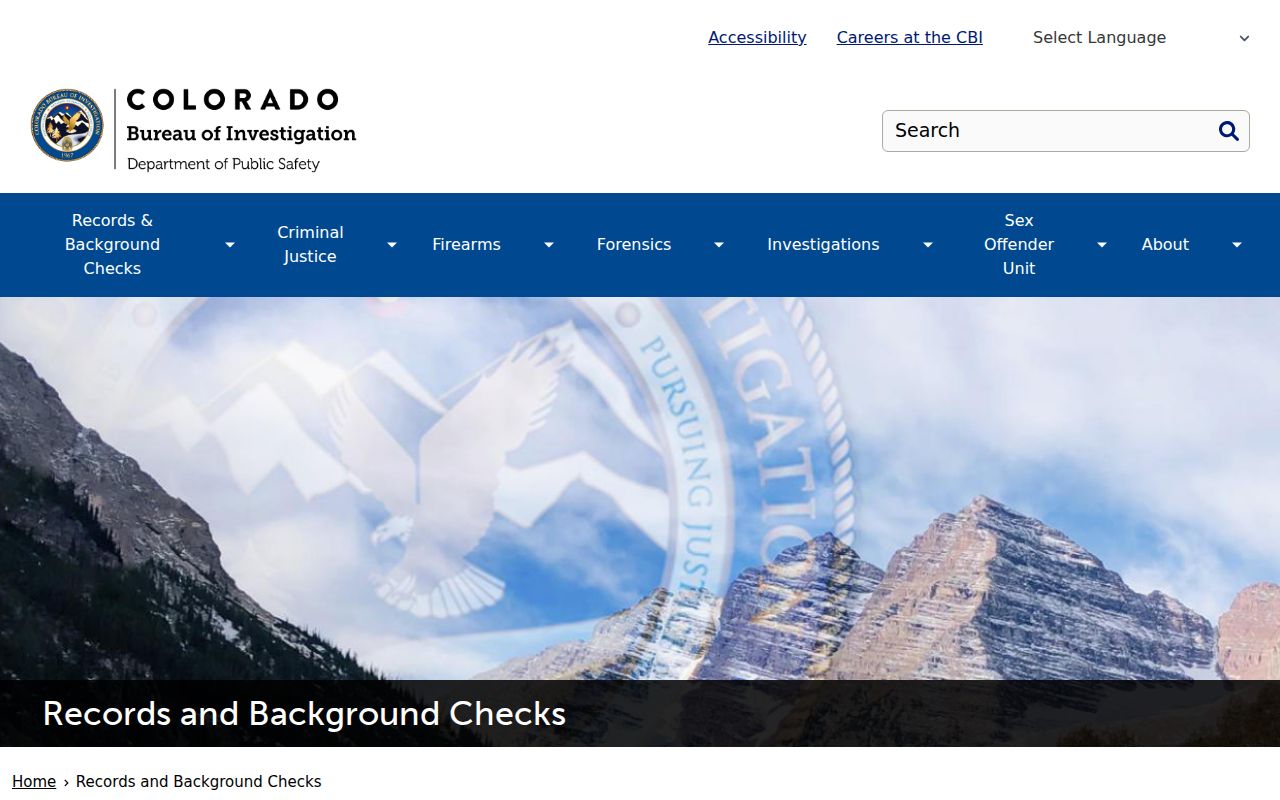
The product list helps separate a public name search from a fingerprint-based review of one’s own Colorado record.
The Criminal History Repository in Colorado
The Colorado Bureau of Investigation’s Biometric Identification and Records Unit maintains the state repository. MBIS links biometric identity, while the Colorado Crime Information Center stores fingerprint-supported criminal history information. Arresting agencies send fingerprint transactions. Courts and justice agencies report later outcomes. CBI then associates those events under a statewide identity.
The result is a compiled rap sheet, not the county’s complete police report or court file. ICHC can include Colorado arrests and reported dispositions. Public output excludes sealed arrests, most juvenile arrests unless handled as adult matters, and traffic arrests below age 16. The portal is Colorado-only and cannot notarize its online result. The specialized CBI criminal history check page compares every official product and correction route.
Note: CBI retains entries it receives indefinitely, even when a source agency later purges its own copy.
Colorado Criminal Record Flow
A record changes as a matter moves through Colorado’s justice system. An officer creates an incident or arrest report. A jail may create a separate booking and collect fingerprints. A prosecutor decides whether to file charges. District Court ordinarily hears felonies, County Court hears misdemeanors and early felony proceedings, and Municipal Court handles local-code cases.
Record flow: Arrest Report › Booking and Fingerprints › Court Case › Disposition › CBI Rap Sheet
Colorado law calls for electronic reporting of the case number and final result for each charge to CBI within 72 hours, excluding weekends and legal holidays. Yet CBI instructions still address missing or “unknown” outcomes. Courts began providing most electronic dispositions around 1998, so older cycles pose special problems. If the repository lacks a result, obtain official disposition papers from the filing court and submit them through CBI’s correction channel.
Record Systems Across Colorado
No single database holds every Colorado criminal record. The official systems below answer distinct questions. A docket event is not a case file, a prison result is not a recent jail booking, and a registry listing is not a full criminal history.
| System | What it holds | Run by |
|---|---|---|
| Colorado ICHC | Public Colorado history reported to CBI | Colorado Bureau of Investigation |
| Judicial Branch Docket Search | Scheduled trial-court events, not full historical files | Colorado Judicial Branch |
| CDOC Offender Search | Current and former state corrections jurisdiction | Colorado Department of Corrections |
| Colorado Sex Offender Registry | Publicly disseminable registrant profiles | Colorado Bureau of Investigation |
| County sources | Bookings, local reports, filed cases, and certified copies | Sheriffs, police, jails, and clerks |
The Colorado Department of Corrections gateway documents the state prison layer:
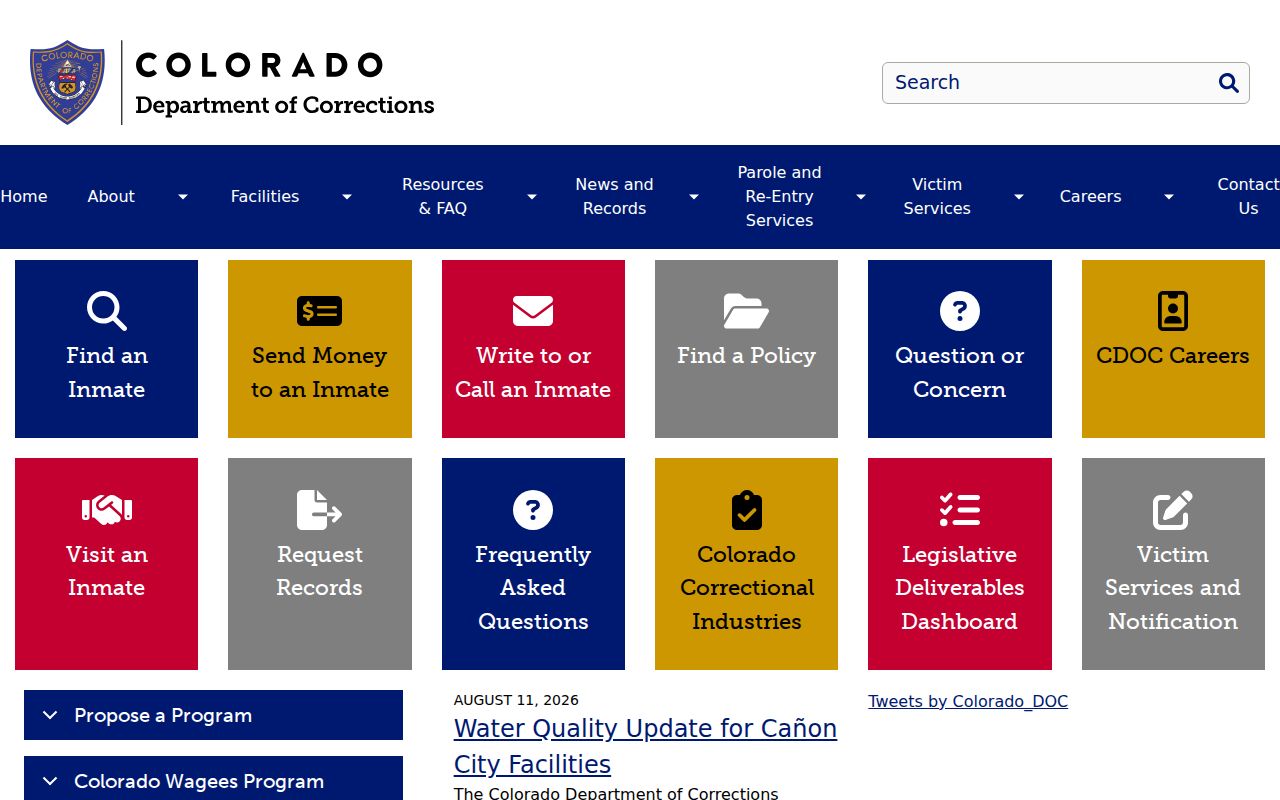
Its statewide role begins after commitment to CDOC and does not replace any county jail roster.
Colorado Criminal Custody Layers
Custody searches divide into three layers. County sheriffs operate local jails for many recent arrests, pretrial holds, and shorter local sentences. CDOC operates the state prison system and publishes Offender Search. Federal custody uses the Bureau of Prisons locator. A no-result at CDOC may simply mean the person is in a county jail, federal custody, or no longer under CDOC jurisdiction.
A 2025 state audit counted 19 state-operated prisons and two contracted prisons. It reported 15,986 people in state and private prisons and more than 26,700 under total prison or parole jurisdiction in March 2025. These are corrections-system measures, not counts of arrests or criminal histories.
| Custody level | Best first source | What it does not show |
|---|---|---|
| County jail | County sheriff or jail | All state and federal custody |
| State prison or parole | CDOC Offender Search | Local jail bookings |
| Federal custody | Federal Bureau of Prisons | Colorado jail and CDOC records |
Colorado Criminal Record Types
Colorado criminal records are linked, but they are not interchangeable. The date and source reveal what each item can prove. A booking shows intake after an arrest. A complaint or information shows what prosecutors filed. A register of actions tracks the court case. The repository connects reported events into an identity-based history.
- Arrest and booking records: created by the arresting agency and receiving jail.
- Court case files: held by the court clerk and able to provide the official disposition.
- CBI histories: compiled statewide entries tied to reported arrest cycles and outcomes.
- Warrants: issued through a court and confirmed with the issuing court or responsible agency.
- Supervision and registry records: maintained under separate probation, parole, corrections, and registration rules.
- Arrest cycle
- An arrest event and the reported charges, identifiers, and outcome linked to it.
- Disposition
- The court’s result for a charge, such as dismissal, acquittal, plea, or conviction.
- SID
- The state identification number attached to a fingerprint identity.
- Rap sheet
- A compiled criminal history, distinct from the original police and court files.
Colorado Criminal Warrant Checks
Colorado does not publish a complete statewide public warrant list. Active warrant data can appear in restricted CCIC and NCIC systems, but those tools are for authorized agencies. Public court dockets may provide a clue. County court or sheriff sources may offer local lookups, though coverage and update timing vary.
A person resolving their own warrant should confirm it with the issuing court or the responsible law-enforcement agency. Have the name, date of birth, possible county, and case number ready. Ask about a safe process for appearing or seeking counsel. Do not treat an old “fugitive” line on an ICHC history as proof that a warrant remains active today.
Warrant status changes. Only the issuing court and responsible law-enforcement agency can confirm whether a Colorado warrant remains active.
Colorado Criminal Supervision Records
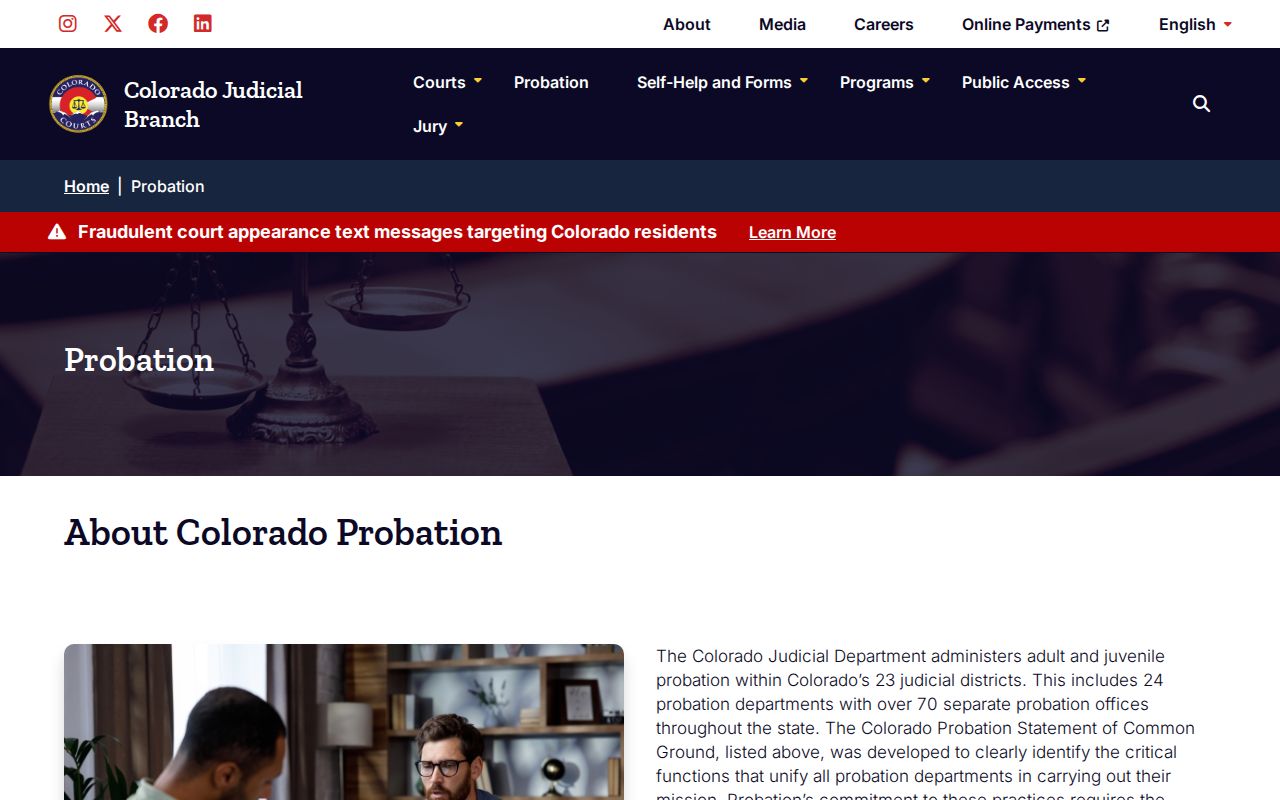
Probation and parole belong to different Colorado systems. Probation is administered by the Judicial Branch through 24 departments in 23 judicial districts and more than 70 field offices. The sentencing court and serving district office are the practical sources. Colorado has no universal public name database for every probation status, and protected reports or treatment details are not open by default.
The Colorado State Board of Parole makes release and condition decisions. CDOC Adult Parole provides field supervision. The state probation office finder shows the local route:
For parole context, the Colorado State Board of Parole publishes its statewide authority and hearing information:
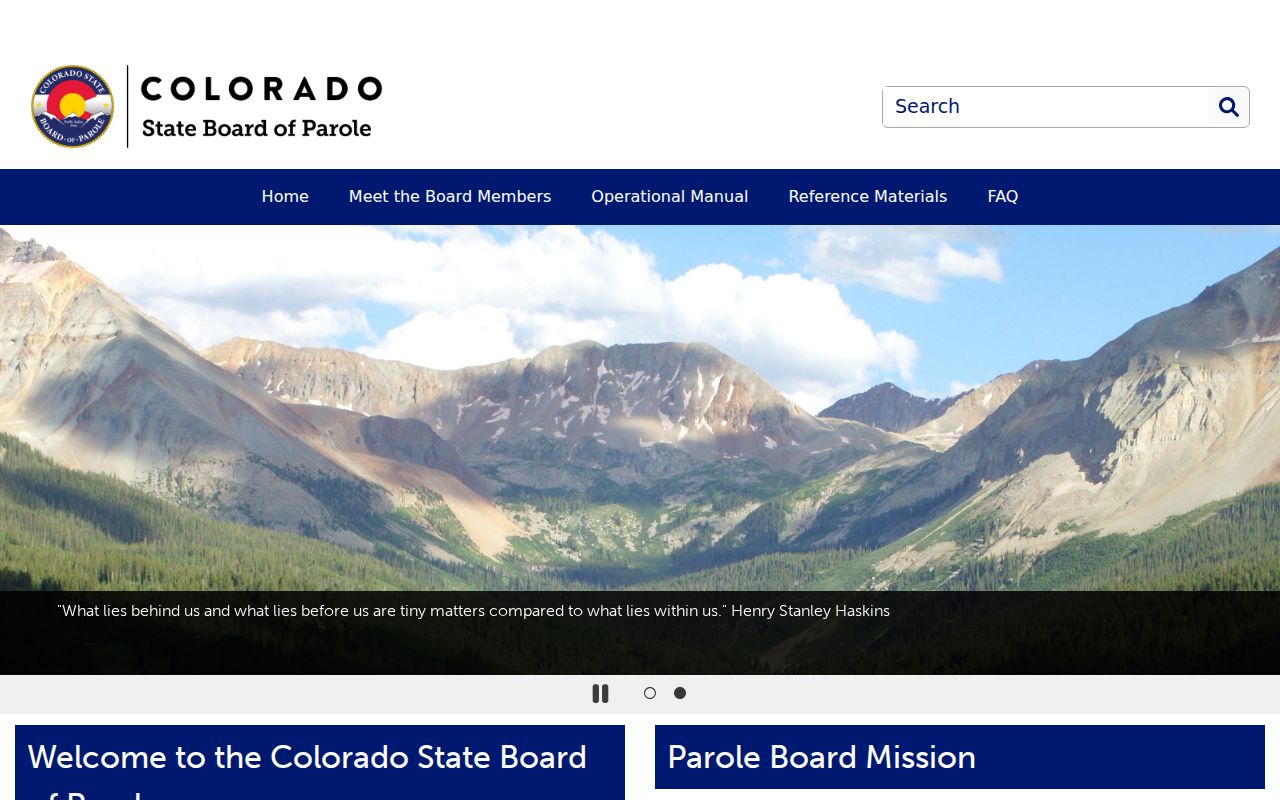
Those channels complement court records and CDOC data rather than merge into one public supervision file.
Colorado Record Access Laws
The Colorado Criminal Justice Records Act, or CCJRA, governs criminal-justice records held by police, sheriffs, CBI, and similar custodians. Records of official action receive stronger public access, while investigative files and sensitive details can require a custodian’s review. The Colorado Open Records Act, or CORA, governs other public records. State court records follow Chief Justice Directive 05-01 instead of the agency-record process.
Key Colorado authorities:
C.R.S. §§24-72-301 through 309 govern access, review, fees, and dissemination for criminal-justice records.
C.R.S. §24-72-304 addresses records of official action and restrictions on certain uses.
C.R.S. §16-21-103 requires courts to report charge dispositions to CBI on the statutory schedule.
C.R.S. §§24-72-704 through 710 establish Colorado’s automatic sealing framework.
The CBI CCJRA request page shows the repository custodian’s request route:
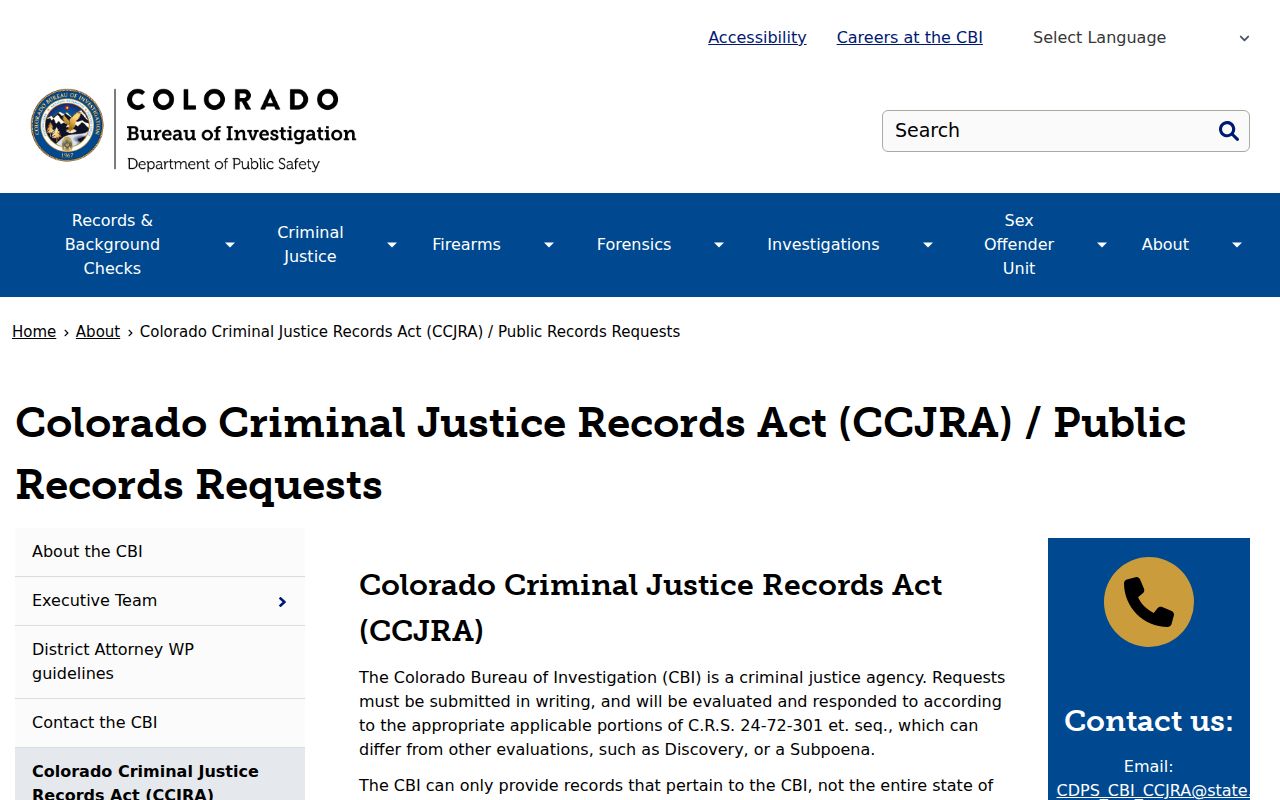
A CBI request reaches CBI-held agency records. It does not make CBI the custodian of a city police narrative or county court document.
Colorado Criminal Incident Reports
Police and incident reports remain with the agency that created them. Colorado has no public statewide pool containing every local narrative. Use the county directory to identify the right police or sheriff records channel. A focused CCJRA request should state the event date, location, case or report number, involved name, exact record, and preferred delivery format.
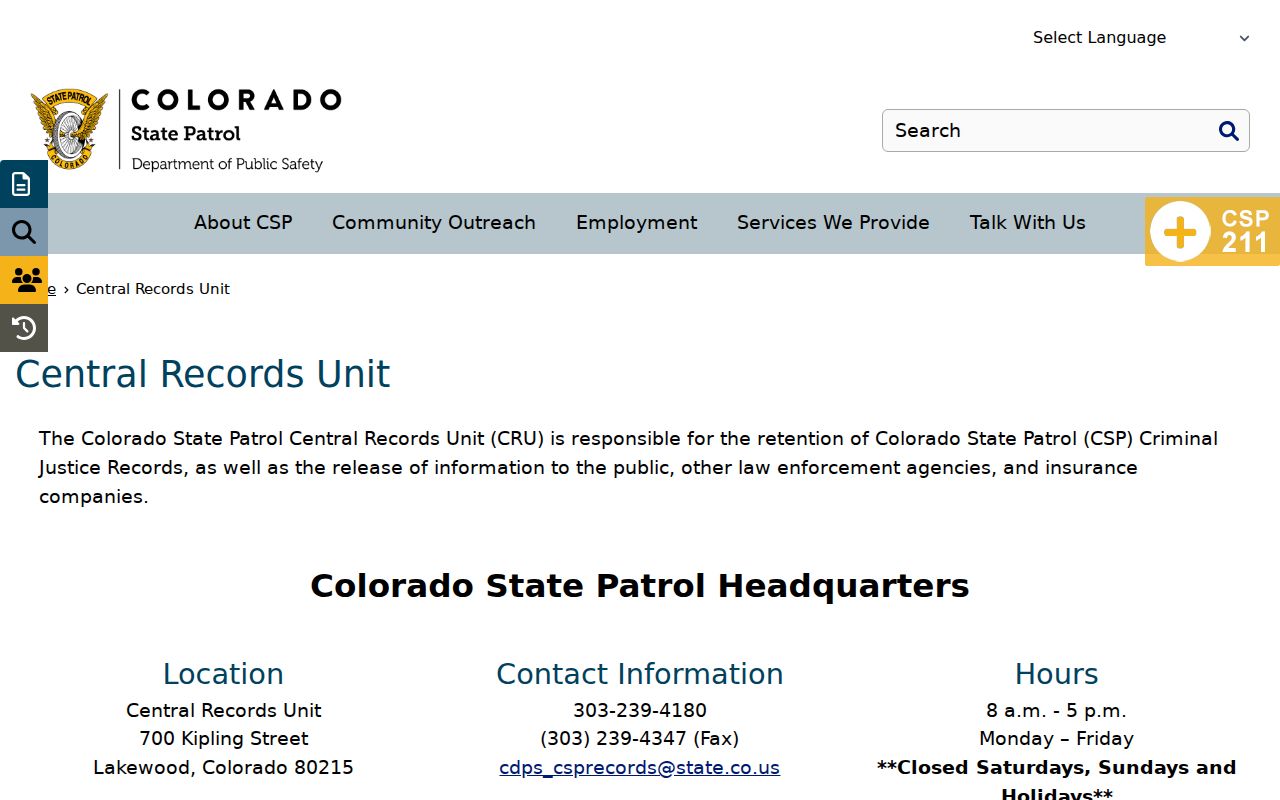
The Colorado State Patrol Central Records Unit is the statewide custodian only for CSP-created records. It offers report and media products with set base prices. A basic crash report is listed at $5, a CSP record check at $7.50, and a complete file at $5 for the first ten pages plus 25 cents per later page. Media review and redaction may add costs.
The CSP Central Records page provides its current request channel:
The separate CSP crash information page describes the crash lookup fields:
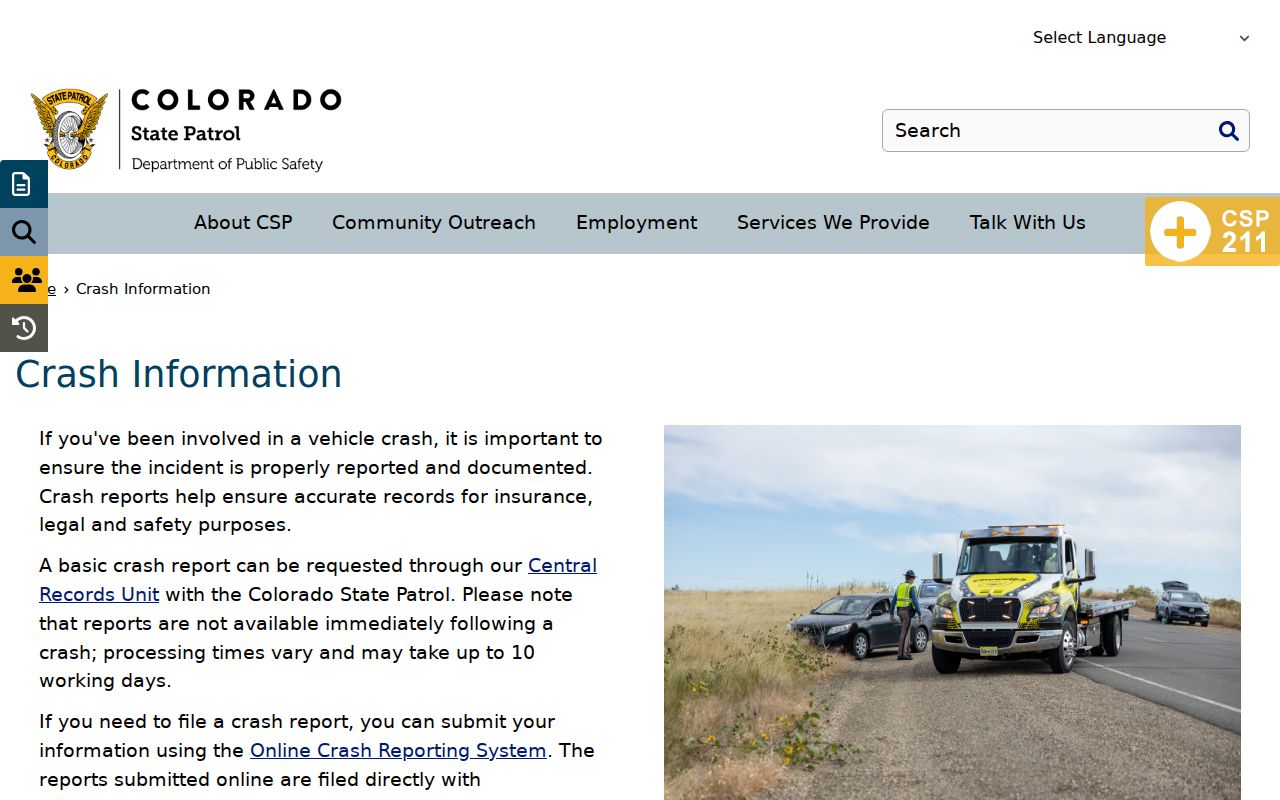
A completed investigated report can take up to ten working days, and self-filed online crash reports route to the Department of Revenue instead.
Colorado Criminal Record Sealing
Record sealing is Colorado’s normal adult remedy. “Expungement” is used for narrower matters, including mistaken-identity arrests and some juvenile cases. Relief can arise through a petition or an automatic process under C.R.S. §§24-72-704 through 710. HB24-1133 changes that took effect July 1, 2025 clarified several automatic processes, deferred-judgment treatment, and remote hearing rules.
A signed order must reach every listed custodian. CBI states that its sealing-processing fee has been $0 since July 1, 2024, though court filing and copy fees may remain. If an accurate record still appears, confirm that the court sent the signed order to CBI and the originating agencies. A record correction is different: it fixes a wrong identity or missing disposition without sealing an otherwise accurate case.
The Judicial Branch sealing resource supplies the current court route. CBI’s official sealing instructions remain the key repository follow-up after a judge signs an order.
Colorado Criminal Charge Classes
Charge class helps identify the correct Colorado court, but a booking charge is provisional. Prosecutors may file a different charge, and the case may later be amended. Colorado District Court handles felony trials. County Court handles misdemeanor trials and early felony proceedings. Municipal Court handles ordinance violations.
Colorado uses felony classes 1 through 6, misdemeanor classes 1 and 2, petty offenses, and civil infractions. Ordinary sentencing ranges appear in C.R.S. §§18-1.3-401 and 18-1.3-501, but crime-of-violence, extraordinary-risk, drug, sex-offense, and offense-specific rules can change them. Read the filed count and final disposition in the court record instead of drawing a result from an initial booking label.
Note: Colorado’s misdemeanor reforms changed the class ladder, so older charts may not describe a current charge correctly.
Colorado Criminal Record Costs
Statewide prices buy different products. ICHC costs $6 per downloaded result. The manual CBI name and date-of-birth route is listed at $13 and can serve the notarized-copy process. The CBI fingerprint public-record component is $16.50, plus any vendor capture cost. An FBI Identity History Summary costs $18 plus fingerprint or channeler charges.
Federal records sit outside Colorado’s repository. PACER covers federal court dockets, the FBI provides a person’s own identity history, and the Federal Bureau of Prisons covers federal custody. Colorado has one federal judicial district, but a federal result will not appear merely because someone also searched CBI, a county clerk, or CDOC.
The official Colorado county population lookup helps place county routing in state context:
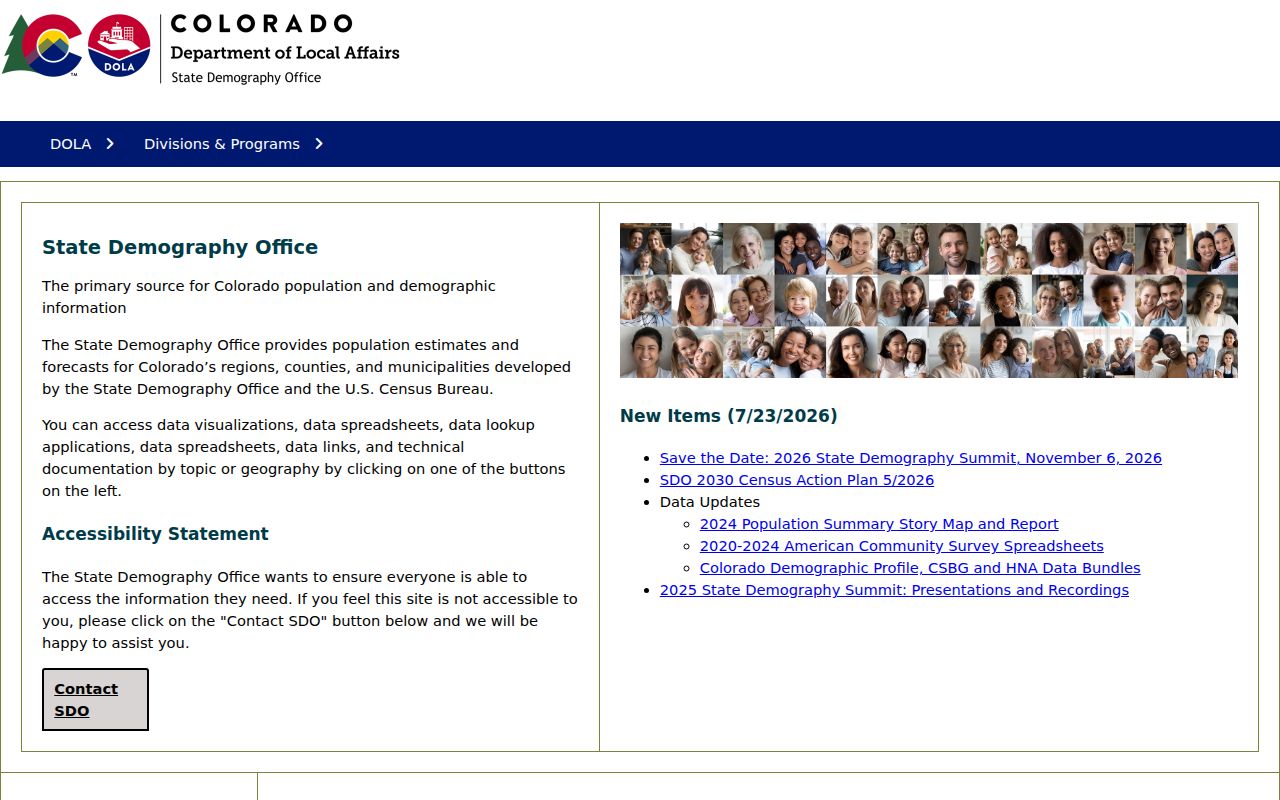
Population does not determine record custody, but it helps explain why search tools and local access methods vary across Colorado’s counties.
Colorado Criminal Records by County
Arrests, bookings, police reports, and court case files are created locally. The correct county often provides the fastest route to a recent event or certified outcome. Colorado’s largest metro counties also illustrate system differences, such as separate local court coverage and the new 23rd Judicial District.
El Paso County
Colorado Springs · Large Front Range county in the 4th Judicial District
Denver County
Denver · Consolidated city and county with separate local court coverage
Arapahoe County
Littleton · Major metro county and the current 18th Judicial District
Jefferson County
Golden · Front Range county sharing the 1st Judicial District
Adams County
Brighton · Large north-metro county in the 17th Judicial District
Larimer County
Fort Collins · Northern Front Range county in the 8th Judicial District
Douglas County
Castle Rock · Fast-growing metro county in the new 23rd Judicial District
Boulder County
Boulder · Major metro county with a single-county judicial district
Browse the full directory of all 64 Colorado counties to open the criminal records site for any county.
The state’s official county-seat dataset supplies the directory locations:
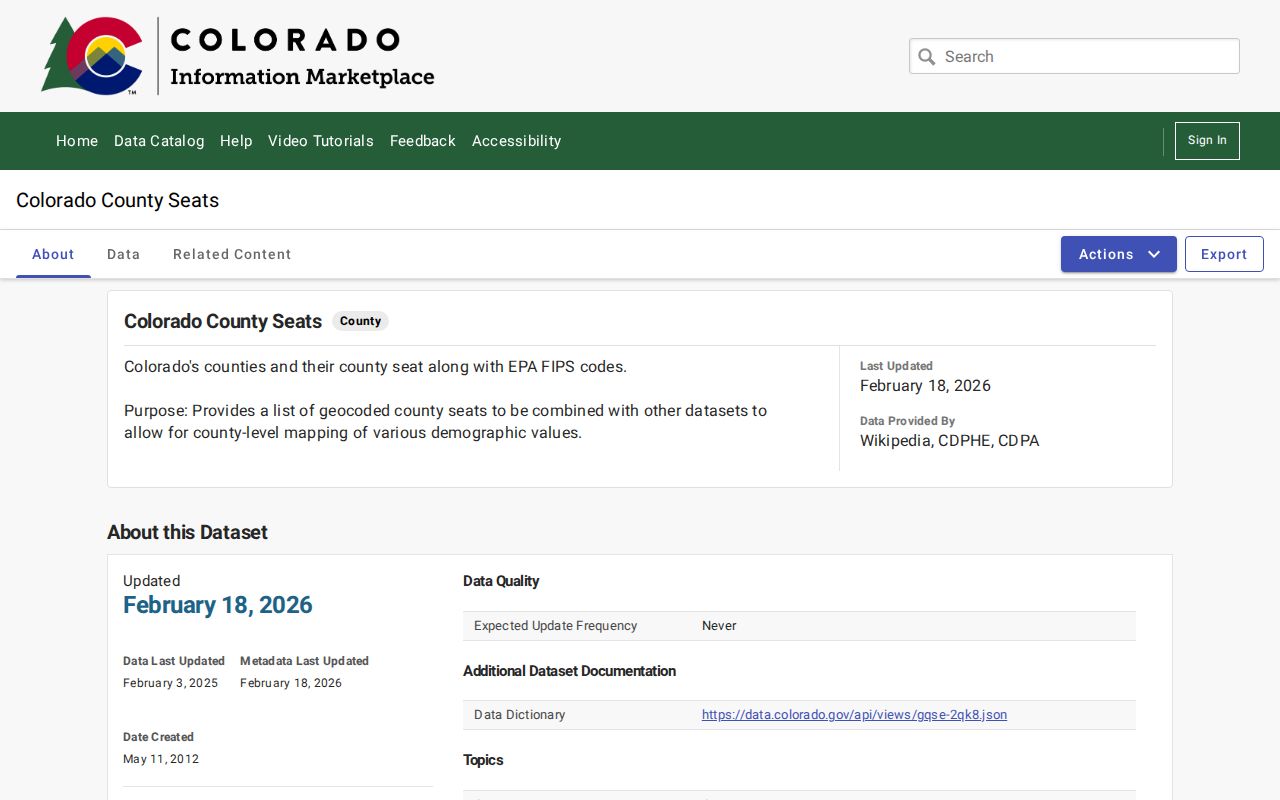
Each directory card routes to a county homepage rather than treating one local office as Colorado’s statewide record custodian.